MegatrendsAnalysesSpeakingNewsletter
CZ
Subscribe

Megatrends · scenarios · resilience · horizon 2031

We don’t know what’s coming. We know how we’ll tell.

The trouble with forecasts is that at most one of them comes true, and nobody knows in advance which. At conferences and in strategy sessions with leadership teams, David Navrátil doesn’t bet on just one. Alongside the forecast he shows several possible futures to 2031, the numbers that will tell us early which one is unfolding, and the steps that pay off in almost all of them.

David NavrátilChief Economist, Česká spořitelna · regular commentator on Czech Television and in Hospodářské noviny
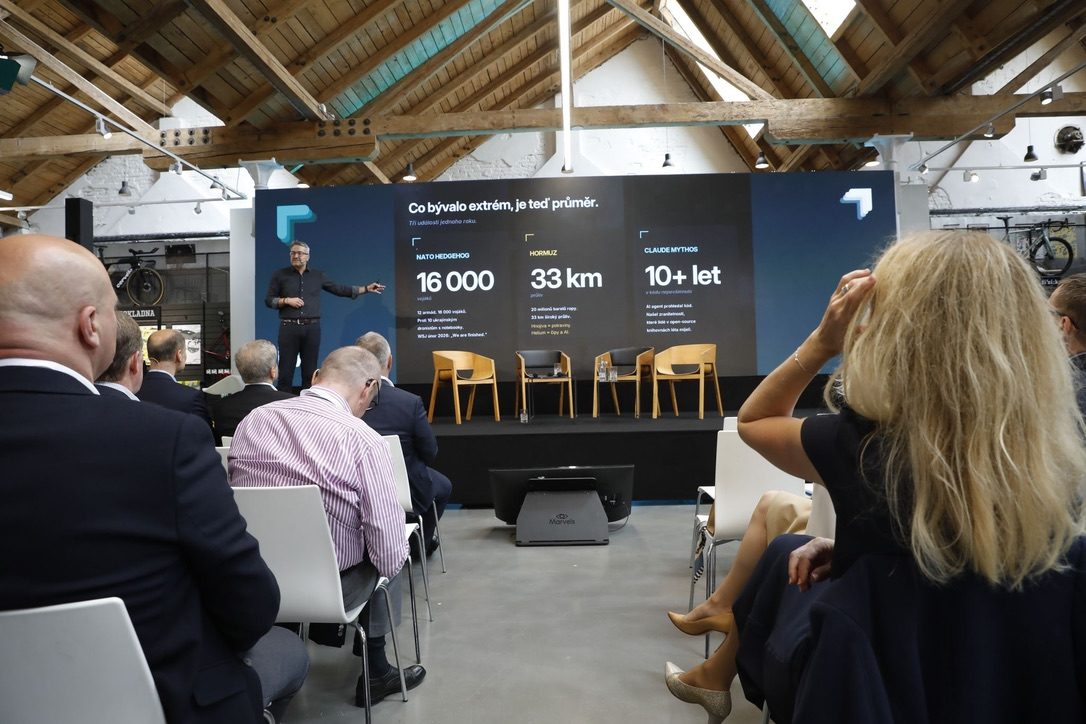
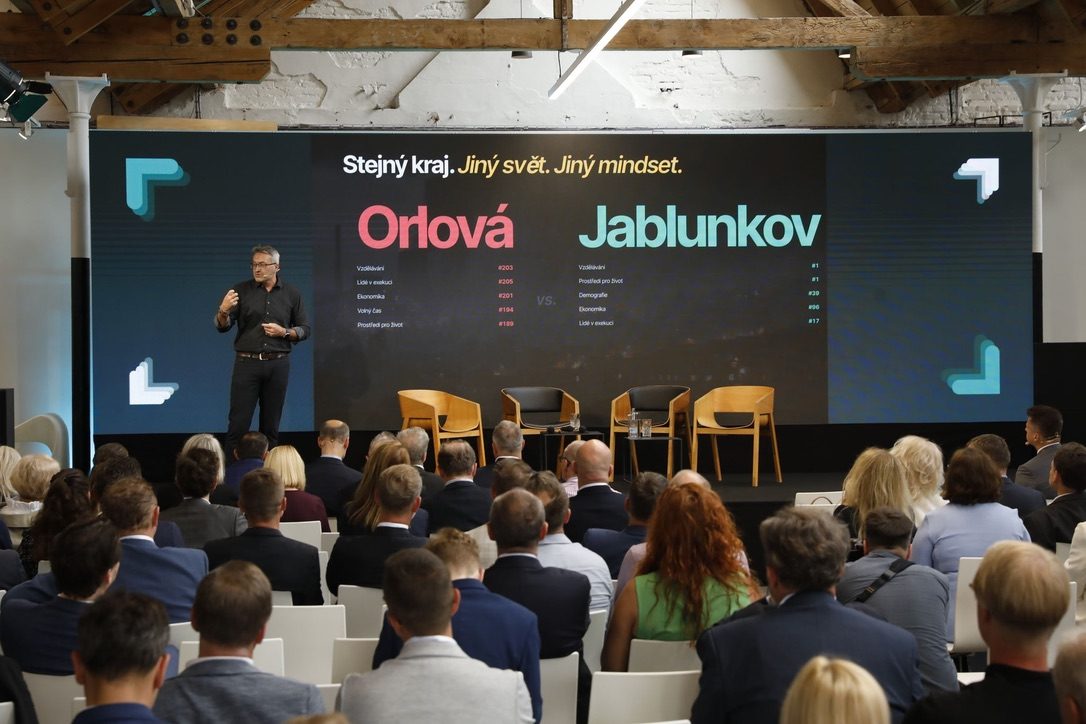
David Navrátil speaking about regions to a full hall, the slide compares the towns of Orlová and Jablunkov

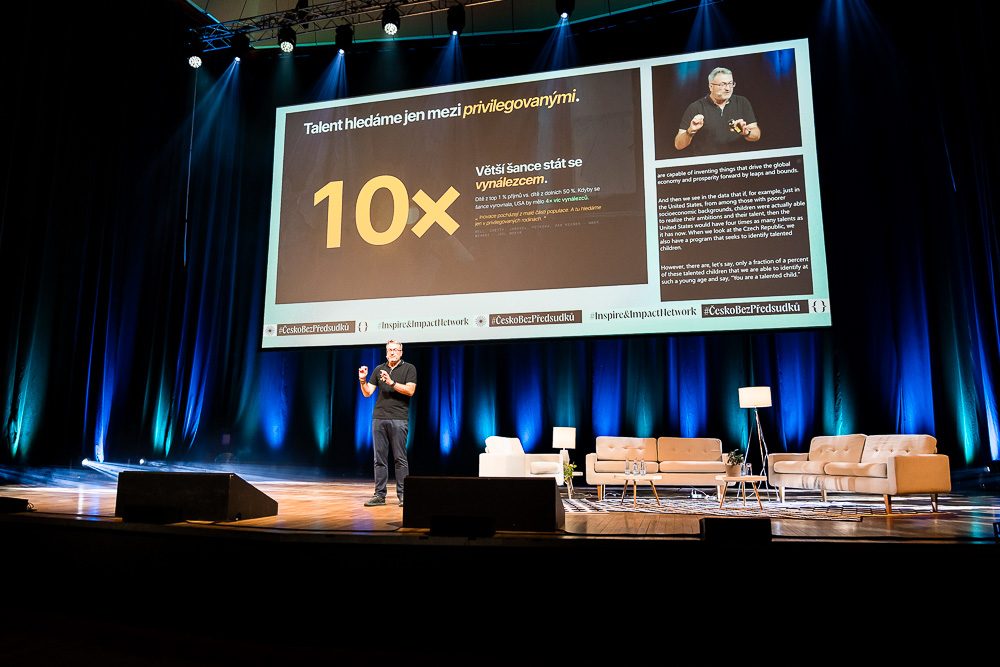
In 2026 his stages included

  • ReVize
  • Inspire & Impact Network
  • Eastlog
  • JuiceUp Engagement Summit
  • CRR conference “Třicet!”

A taste of the data

Numbers you would probably have guessed differently

A few of the numbers David takes on stage. Each comes with its source and its caveat, which is the part that rarely makes it into a headline.

Regions · GDP per capita

After 24 years, North-West Bohemia is right where it started relative to the EU average, while Poland’s Lublin region has gained 20 points.

GDP per capita in purchasing power parity, EU average = 100

North-West Bohemia and Lublin region, 2000 to 2024 North-West Bohemia: 61 points (EU average = 100) in 2000, at most 65 in the selected years (2019 and 2020), 61 again in 2024. Lublin region: 35 in 2000, 44 in 2010, 51 in 2019, 55 in 2020 and 2024. Source: Eurostat; the 2024 figure for Lublin is preliminary. 605040200020102024 61613555 North-West BohemiaLublin region, Poland

In between, North-West Bohemia reached 63 to 65 (most recently in 2020), but in 2021 it fell back to 61. What decides who catches up and who marks time?

Eurostat, GDP in purchasing power parity; North-West = Karlovy Vary and Ústí regions; selected years, not an annual series; Lublin 2024 preliminary, the Polish series has breaks, the 20-point gap is an approximate derivation
Interactive analysis: Stronger Regions Index (in Czech)

AI in companies

7 %

of euro area firms use AI substantially; another 64% are trying it or using it lightly. It is a bit like a gym: most people have a membership, few actually train hard. What to watch: whether that group grows and what changes in how those firms operate.

ECB, SAFE survey of firms (Q4 2025); according to the ECB Consumer Expectations Survey, 52% of employed people use AI at work, up from 26% in 2024; both surveys cover only the euro area, i.e. not Czechia
Regions · population

3 of 14

According to the Czech Statistical Office projection, only three regions will have more inhabitants in 2081 than in 2024: Prague, Central Bohemia and Plzeň. The Karlovy Vary region would lose 44% of its population. The projection rests on assumptions about fertility and migration. When the assumptions change, the projection ages faster than the population.

Czech Statistical Office, regional population projection, as of 1 Jan 2024 and 1 Jan 2081

Six more numbers and the full map In your industry, other numbers will matter. Want to know which? Book a talk

What stands behind every talk

A map of 76 forces looking ahead to 2031

Ageing, AI, climate and geopolitics each get their own books and their own conferences. The Megatrends and Uncertainties catalogue puts them on one map, because a company meets them all at once.

  1. What is measured is never mixed with an estimate.

    Every claim shows whether it is measured, estimated or a hypothesis, where it comes from and how far it can be relied on.

  2. Every thesis goes through a red-team review.

    It works like a car inspection: it doesn’t care what works on the car, only where it could fail. So it looks for evidence against, not confirmation.

  3. What will decide is set in advance.

    For every uncertainty, indicators and thresholds are set before the data arrive, so nobody can move the target afterwards to wherever the arrow happened to land. Which future is coming is then shown by the data, not by impressions.

The full map of 76 forces and an example of one crossroads

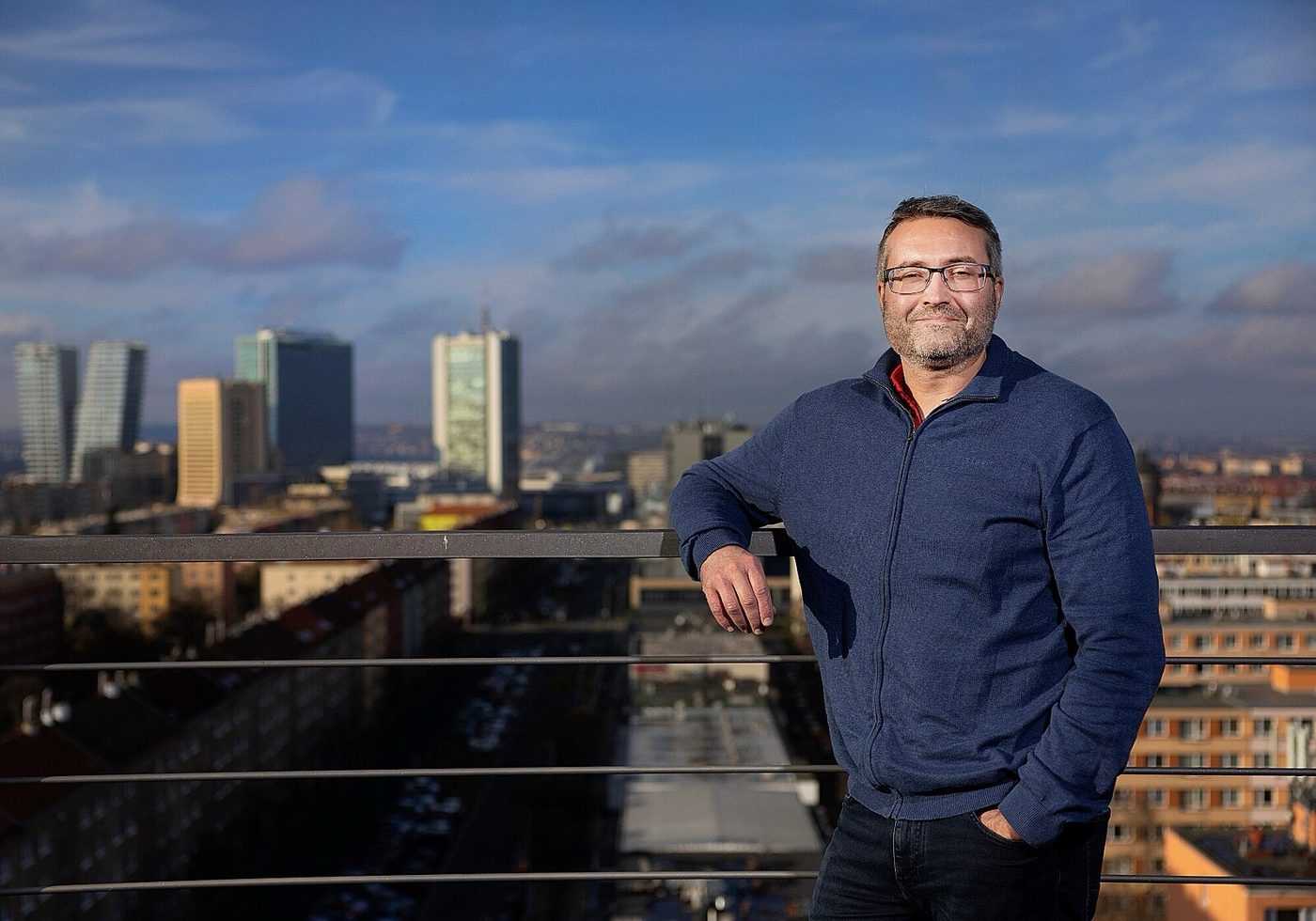
David Navrátil, portrait on a rooftop overlooking Prague

Who will be speaking

Big changes explained without jargon, for a newcomer as well as for a board.

What will ageing do to your customers? Who will capture the gains from AI? And when is it time to change the plan?

At conferences each topic usually gets its own speaker: one on the economy, another on technology, a third on society, and the audience is left to work out how it all connects over coffee. David does that work for them: he picks from the data what matters to your audience and shows where the changes meet.

Chief Economist, Česká spořitelna (Erste Group)Started at the Czech National Bank; has led the Economic and Strategic Research team since 2008.Over 50 talks a year and more than 15 years in the media.Author of the newsletter Peníze, procenta a prosperita (Money, Percentages and Prosperity) and of the interactive analyses on davidnavratil.com.

Three terms without the jargon

Purchasing power parity
compares how much people can buy for their money, not what their money is worth at the market exchange rate.
Bottleneck
a place where a single jam is enough to slow everything down.
Indicator threshold
a number at which you agree in advance to stop debating and start acting.

What it looks like on stage

Slides can be read at a glance, so the rest of the time belongs to the explanation.

Source: Czech Social Security Administration, Statistical Yearbook of Pension Insurance 2024, table 6.7; average duration of regular old-age pensions terminated in the given year, since 2018 only those terminated by death (series break)

Sample slide

A big chart, a big number and as little text as possible, because a room that reads isn’t listening. Each chart then comes with what it shows, where its limits are and why it matters to you. This one shows that regular old-age pensions ending in 1970 had been drawn for 11 years, and those ending in 2024 for almost a quarter of a century. Its limit: these are pensions that have already ended, not an estimate for today’s new pensioners.

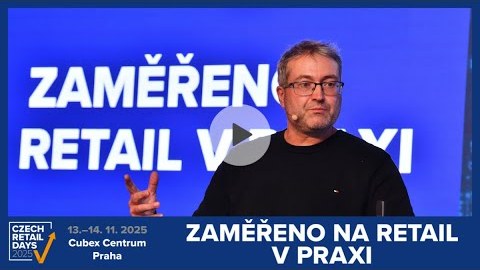
Czech Retail Days 2025 · recording on YouTube (in Czech)Risks and opportunities: an economic outlook for retail 2026+

Topics

Unfortunately, the world doesn’t change one chapter at a time. It changes all at once.

David tailors every topic to the audience and always gets to the question everyone in the room asks anyway: what does this mean for our company, our customers and our people?

01

A forecast is not enough: how to be ready for more than one future

Nobody would pack for a holiday based on next August’s weather forecast, and yet plenty of business plans get written that way. How to build several possible futures instead, which steps pay off in most of them, and what helps a company change course in time when the world heads elsewhere.

I want to hear this →
02

Crises that collide

Geopolitical, energy and economic shocks no longer arrive one at a time; they come in clusters. Where is your company’s own small Hormuz, and how do you find it before a crisis does?

I want to hear this →
03

AI: gains for everyone, or for a few?

Most euro area firms are still trying AI or using it lightly; only a small share use it substantially. Who will end up earning from it (firms, their employees or foreign owners), and where will it show up before it reaches the accounts?

I want to hear this →
04

Ageing: customers, work, savings

Czechia is ageing, and with it your customers, your employees and their savings. What this does to the labour market, to regions and to the life plans of the people a company sells to.

I want to hear this →
05

Trust: what holds society together

Trust does not appear on the balance sheet, yet it shows up in it: where it is missing, business tends to be slower and more expensive. Why it matters to companies too and how to track whether it is growing or fading.

I want to hear this →
06

Household money: where savings are moving

Why household savings are on the move right now, where they are heading and what it means for companies that hope to attract them.

I want to hear this →
07

Regions: who catches up and who marks time

Why Poland’s Lublin region is closing in on the EU average while North-West Bohemia stands still, and what makes the difference.

I want to hear this →

Two formats

A talk, or a session with leadership

It depends on whether you want to open a topic to the whole room or take it with your leadership team all the way to a decision on what comes next. Either can be in Czech or English.

Conferences and corporate events

40 to 60 minutes

Talk

Big changes translated into your audience’s language, with numbers chosen so that people can retell them to colleagues the next day.

  • two or three possible futures and the numbers that tell them apart
  • examples from the audience’s own industry
  • time for questions, including the awkward ones
Book a talk

Leadership team

2 to 3 hours

Strategy session

Scenario planning around one table with your leadership. David goes through the forces changing your industry and builds two or three possible futures from them. For each you discuss what it would mean for the company, and at the end you choose the steps that hold up in most of them. You leave with the scenarios and a short list of numbers with thresholds you can keep watching.

  • five forces selected in advance for your industry
  • two or three scenarios and what they would mean for you
  • steps that hold up in most scenarios
Book a strategy session
1

You say who it’s for

What kind of event, who will be in the room and what people should leave with. A few sentences will do; it doesn’t have to be a novel.

2

You agree on the topic

A short call with David, after which he picks the forces and numbers that matter to your people.

3

You get a tailored talk

Before the event, every number is checked against its source once more, so nobody on stage presents last year’s statistic as news. After a session you keep the scenarios and a list of indicators you can keep watching.

Date not fixed yet?

Write anyway. The date can be settled with David later, and work on the topic can start in the meantime.

How large an audience?

From one table in a meeting room to a packed hall; the format adapts to the number of chairs.

Enquiry

Invite David to your event

Tell us who the event is for and what people should leave with. You will fine-tune the topic and format with David.

Or simply by e-mail: davidxnavratil@gmail.com

Materials for organisers (bio, photos, introduction for the host): on one page

Nothing planned yet? David’s newsletter Peníze, procenta a prosperita (in Czech) keeps track of what is changing in the world and why.

The reply will come to the e-mail address you enter.

Your data is used by David Navrátil (controller) to handle the enquiry. If you enquire in your own name, the legal basis is steps taken at your request before entering into a contract; if you act for a company, it is the legitimate interest in communicating about its enquiry. The form will not accept an enquiry without a name, e-mail and company or event. Enquiries are stored on the website’s server at Hetzner Online (data centre in Finland) and delivered via Gmail (Google), which may transfer data to the USA under the EU-US Data Privacy Framework. They are kept for as long as needed to handle the enquiry and any follow-up cooperation, then deleted. You have the right of access, rectification, erasure, restriction of processing and, under GDPR conditions, data portability (write to davidxnavratil@gmail.com), and the right to lodge a complaint with the Czech Office for Personal Data Protection.

Right to object: if you act for a company, your data is processed on the basis of legitimate interest. You may object at any time, on grounds relating to your situation, at davidxnavratil@gmail.com.

Slide from a talk: length of old-age pensions

Slide: old-age pensions that ended in 1970 had been drawn for 11 years, those ending in 2024 for almost a quarter of a century

Peníze, procenta a prosperita (Money, Percentages and Prosperity): my newsletter on the economy, technology and the state, in Czech. Subscribe free